
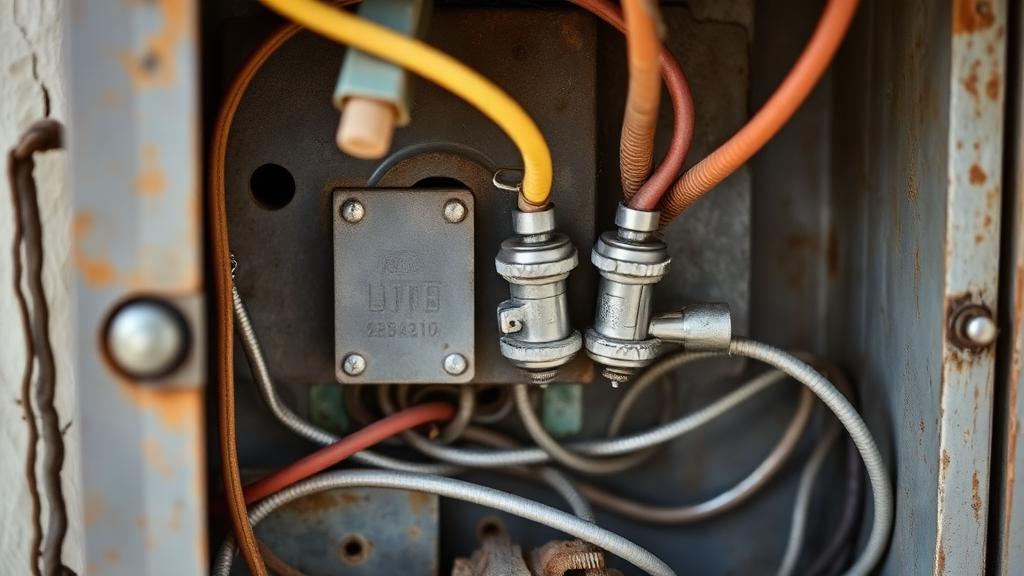
Tens of thousands of Canadian homes built between 1965 and 1976 were wired with aluminum branch circuit wiring. While aluminum is an excellent conductor, it expands and contracts more than copper, which can cause loose connections, overheating, and — in worst cases — house fires. If you own a Kingston home from this era, here's what you need to know.
Why Was Aluminum Wiring Used?
During the mid-1960s to mid-1970s, copper prices skyrocketed, and builders turned to aluminum as a cheaper alternative for residential branch circuit wiring. Aluminum worked fine for large-gauge service entrance cables (and still does today), but the smaller-gauge wiring used for outlets, switches, and lights proved problematic over time. The issue isn't the aluminum itself — it's what happens at connection points.
What Are the Risks?
Aluminum wiring poses fire risks primarily at connection points — outlets, switches, light fixtures, and the panel. When aluminum heats up (which it does more than copper), it expands. When it cools, it contracts. Over decades, this repeated expansion and contraction loosens connections. Loose connections create resistance, resistance creates heat, and heat can ignite surrounding materials. According to the Consumer Product Safety Commission, homes with aluminum wiring are 55 times more likely to have one or more connections reach fire-hazard conditions.
How to Identify Aluminum Wiring
Look at the wiring entering your electrical panel or at an outlet. Aluminum wiring is silver-colored (copper is orange/brown). You may also see "AL" or "ALUMINUM" stamped on the wire jacket. If you're unsure, a qualified electrician can confirm in minutes. Many Kingston homes in neighborhoods like Kingscourt, Strathcona Park, and parts of the west end were built during the aluminum wiring era.
Insurance Implications
Many Ontario insurance companies will not insure homes with unremediated aluminum wiring, or they'll require an electrical inspection and remediation certificate before issuing a policy. If you already have insurance, your provider may require remediation upon renewal. This is a significant concern for Kingston homeowners buying or selling homes with aluminum wiring — it can affect both the sale price and the closing timeline.
Remediation Options
There are three main approaches to addressing aluminum wiring:
• COPALUM crimps: The gold standard. A special tool crimps a copper pigtail to each aluminum wire using a COPALUM connector. This is the only method recognized by the CPSC as a permanent repair. Cost: $3,000–$6,000 for a typical home.
• AlumiConn connectors: A widely accepted alternative that uses set-screw connectors to join copper pigtails to aluminum wires. Approved by the ESA and accepted by most insurance companies. Cost: $2,500–$5,000.
• Full rewire: Replacing all aluminum wiring with copper. This is the most thorough solution but also the most expensive and disruptive. Cost: $10,000–$25,000+ depending on home size.
What We Recommend
For most Kingston homeowners, AlumiConn pigtailing is the best balance of safety, cost, and insurance compliance. It's ESA-approved, accepted by virtually all insurance companies, and can be completed in 1–2 days without opening walls. We've done hundreds of aluminum wiring remediations across Kingston and can provide a certificate of completion for your insurance company.
If your Kingston home has aluminum wiring, don't panic — but don't ignore it either. Contact Taylor G Electric for a free inspection and quote on aluminum wiring remediation. We'll help you get your home safe and your insurance sorted.
Call 647-896-4411